

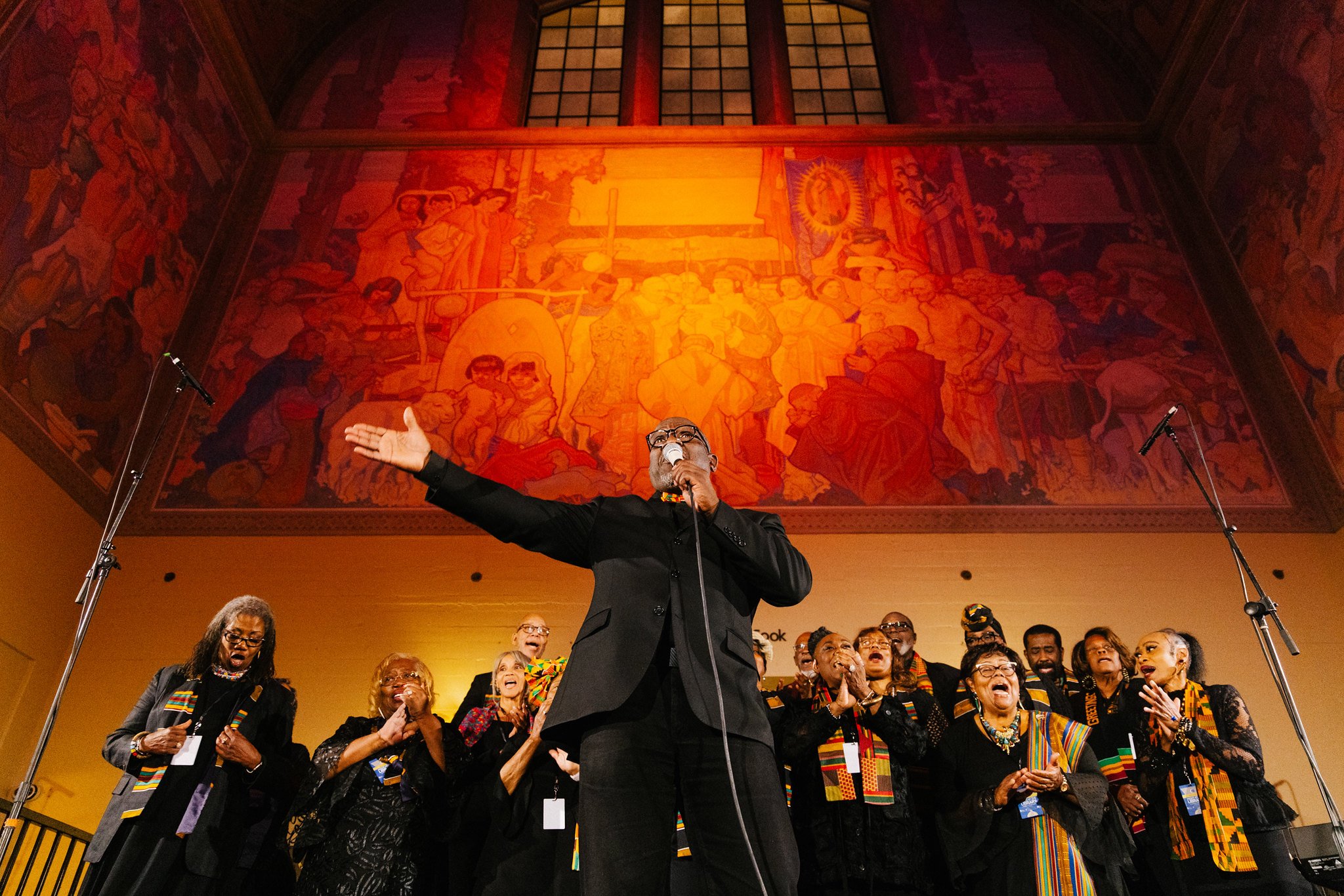
Field Notes: Night at the Library: Remixing the Rotunda at the Los Angeles Public Library
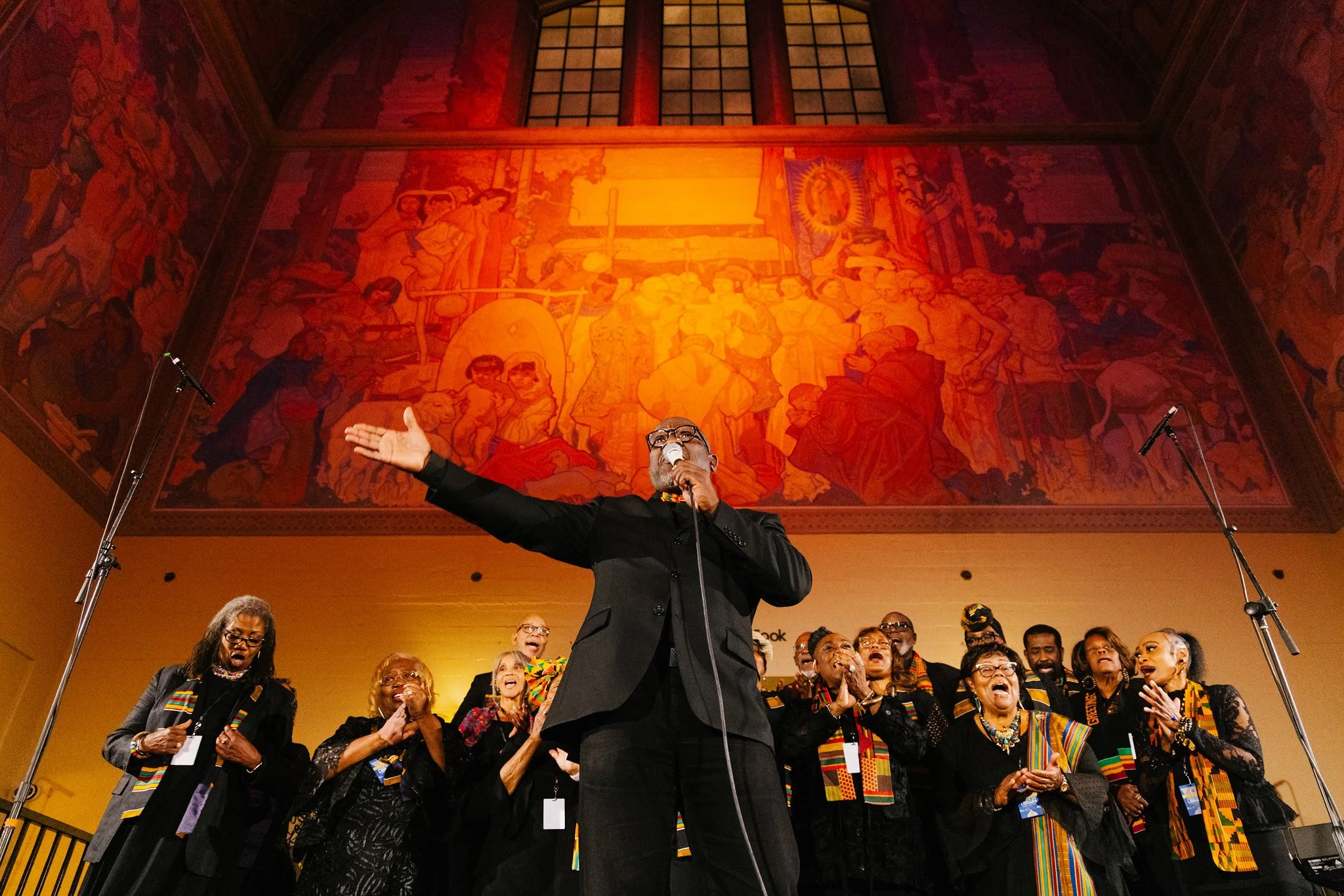
Photo Credit: Library Foundation of Los Angeles
The Rotunda and the Civic Imagination
For NOMMO’s second engagement with the Los Angeles Public Library and the Library Foundation of Los Angeles, we were commissioned to curate an activation of the Central Library’s historic rotunda as part of the Centennial celebration, Night at the Library 2026.
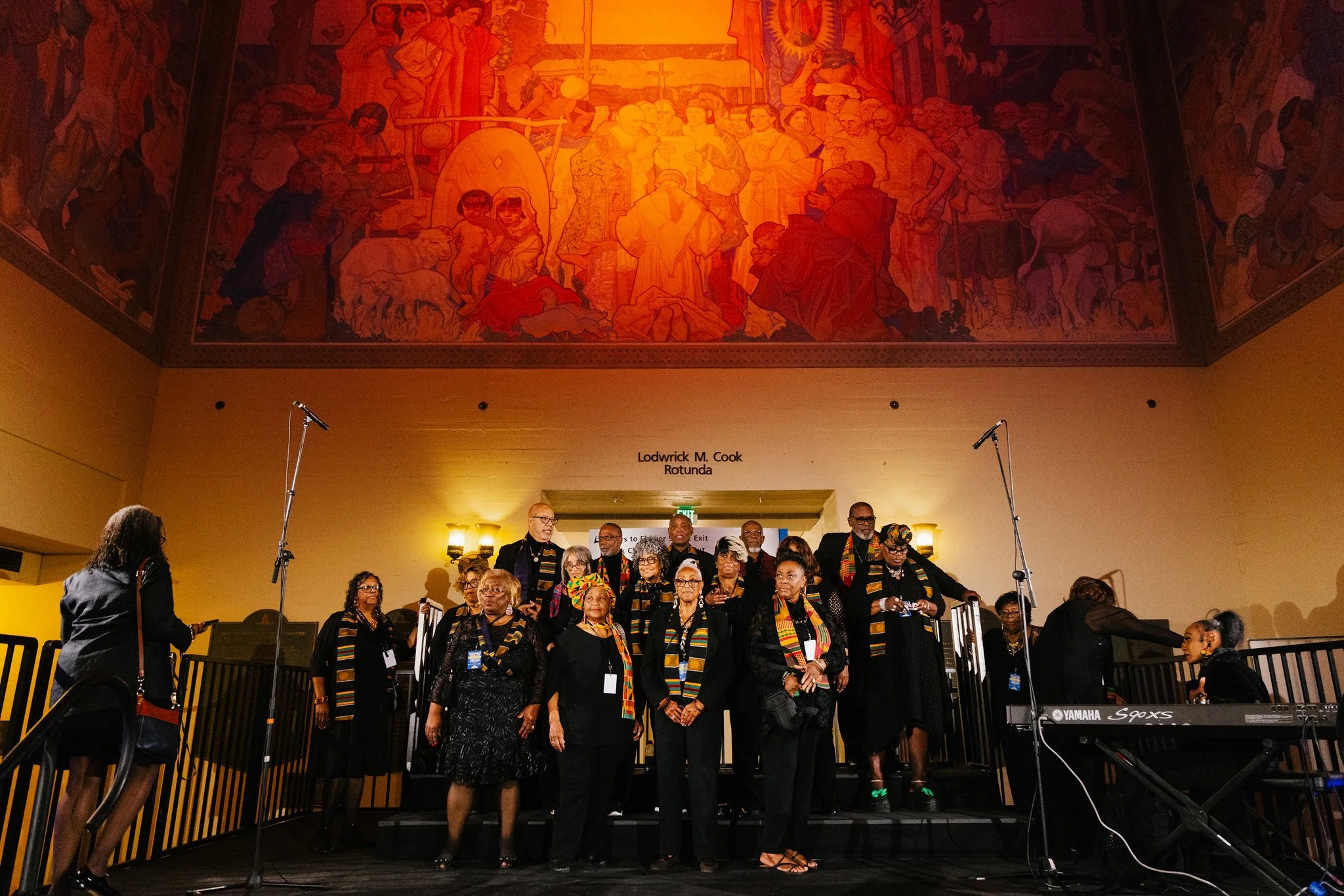
The rotunda is one of the Library’s most iconic architectural spaces. Encircled by murals depicting the origins of Los Angeles, the room reflects a civic narrative centered on conquest, religion, and westward expansion. Conquistadors, missionaries, and colonial imagery dominate the city's visual landscape, shaping a particular vision of its history and civic imagination.
But like many civic monuments, the mural also reveals its omissions.
Absent from the space are the expansive contributions of Black Angelenos and African Americans to the cultural, spiritual, and social history of Los Angeles and the American West.
Rather than treating that absence as a limitation, NOMMO approached it as a possibility. Using our Remix the Archive methodology, we began considering how the rotunda itself could be reinterpreted through sound, performance, and collective memory. What would it mean not simply to activate the archive, but to remix the civic narrative embedded within the architecture itself?
Black Sound as Living Archive
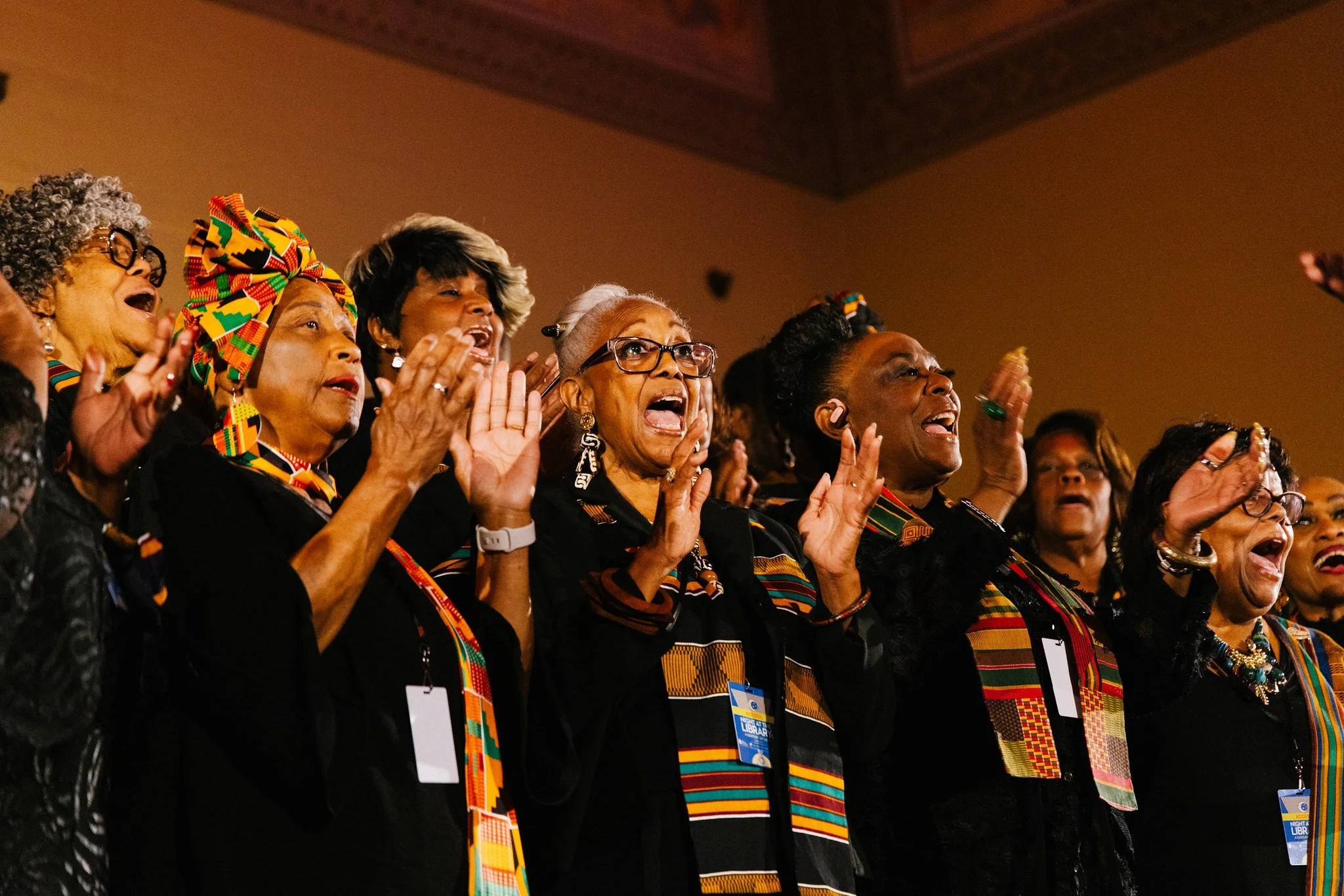
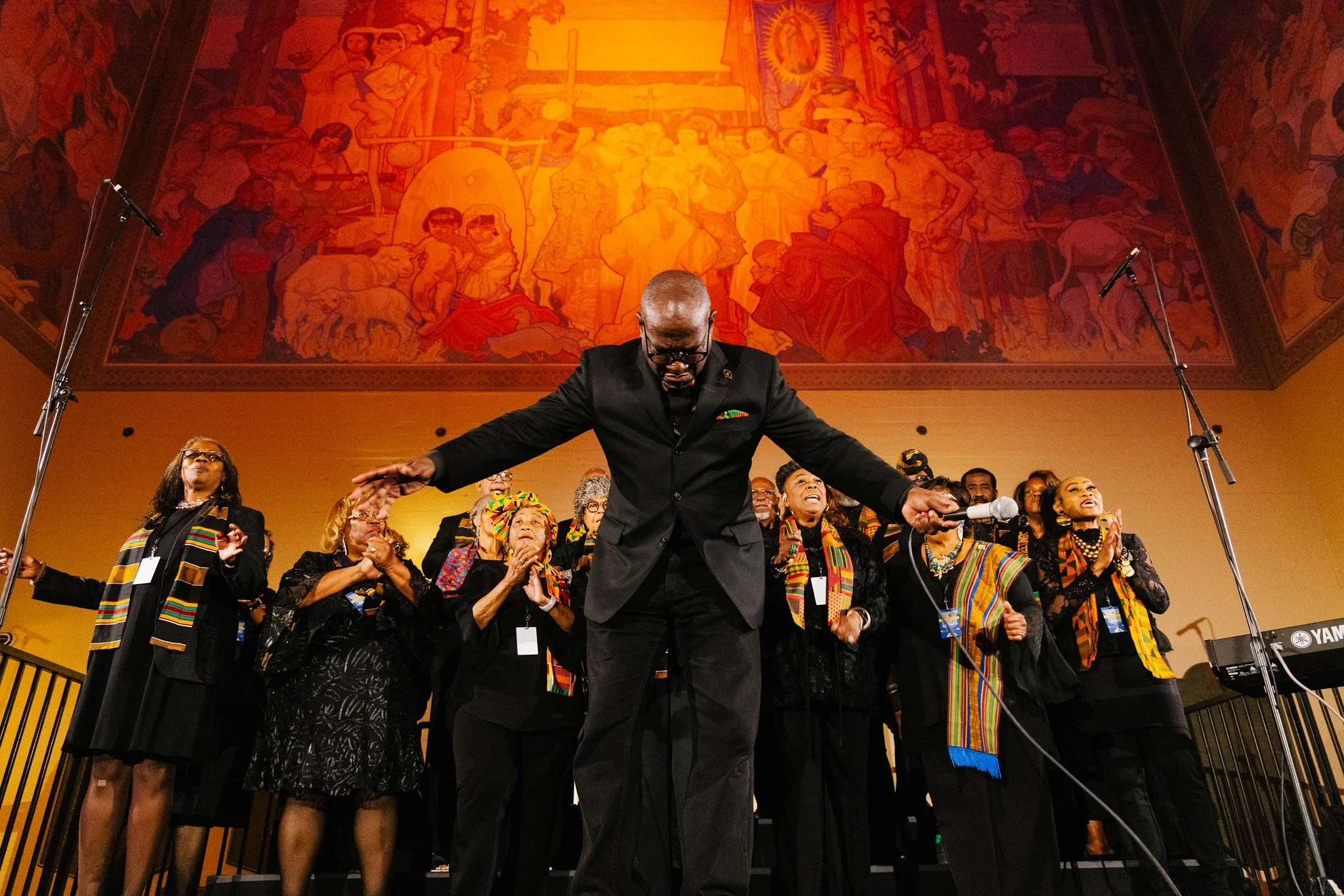
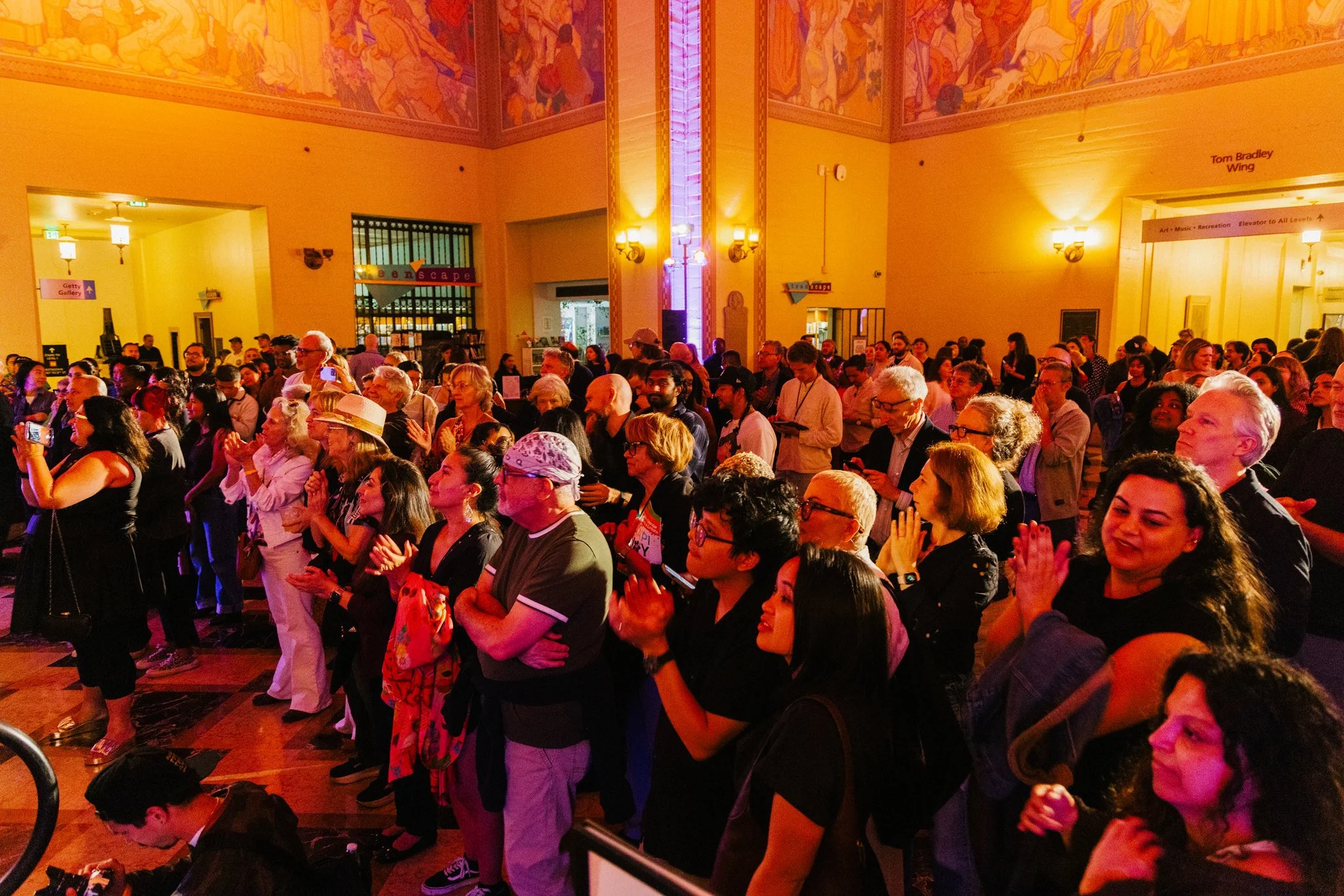
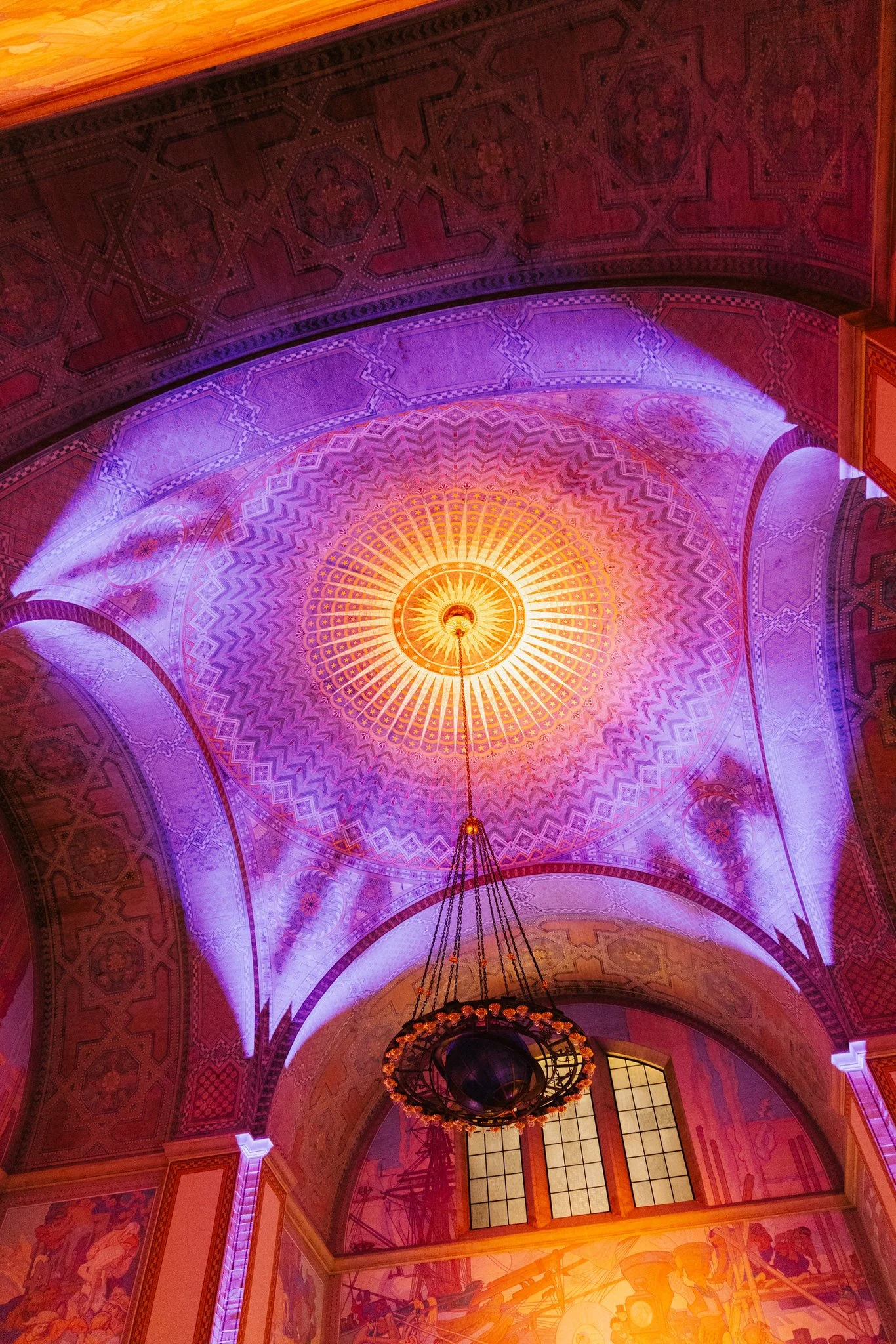
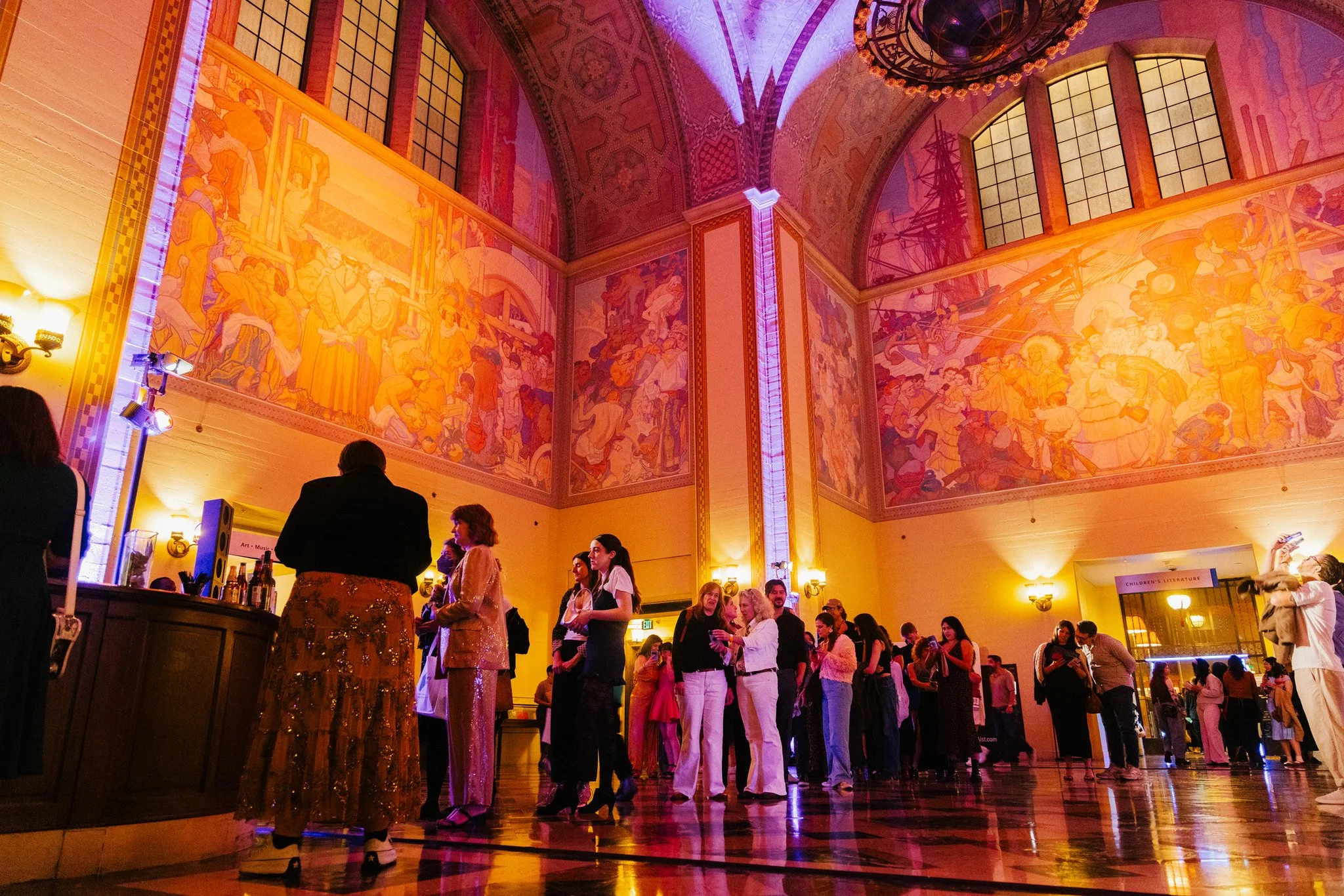
In reflecting on this activation, NOMMO considered the relationship between the sacred and the civic. What happens when Black music fills the spaces history tried to leave silent?
To answer that question, NOMMO invited the historic Gospel Music Workshop of America — Los Angeles Chapter, led by Calvin B. Rhone, to transform the rotunda through gospel music, memory, and collective praise.
The activation also coincided with the approaching 60th anniversary of the founding of the Gospel Music Workshop of America by gospel pioneer James Cleveland. Featuring more than 20 singers, including several vocalists who performed alongside Aretha Franklin during the recording of Amazing Grace in the 1970s, the performance brought generations of Black musical history into direct conversation with one of Los Angeles’ most recognizable civic spaces.
The evening became more than a performance. It marked a reoccupation of civic space through Black sound. A choir stood beneath murals that never imagined their presence there, transforming the rotunda into a living sonic archive that echoed throughout the Library.
What emerged was an intergenerational gathering centered on spirituality, resilience, memory, and possibility. For one evening, the Library did not simply hold history.
It sang back.
Narrative Architecture and Public Memory
Over 3,000 Angelenos moved through the activation during Night at the Library, witnessing how music, architecture, and public memory can converge within institutional space.
The performance highlighted how Black spirituality and gospel music continue to function as cultural infrastructure, carrying histories, emotions, and communal memory across generations while introducing many audiences to traditions of Black sacred music they may rarely encounter within civic institutions.
For NOMMO, the activation reflected the broader possibilities of narrative architecture and cultural strategy. By bringing gospel music into the rotunda, NOMMO sought to create an encounter between archive and activation, sacred expression and civic architecture, absence and presence.
Rather than erasing the existing mural, the performance placed Black cultural memory into active dialogue with it. Through sound, performance, and collective experience, the activation illuminated the histories often omitted from civic narratives while demonstrating how institutions can create space for new interpretations of public memory.
This is what NOMMO means when we say:
Remix the Archive.